The Richmond Blog
Fitness Tips, Nutrition Advice & Member Stories
Stay inspired and informed with the latest articles from our fitness experts and community.
Apr 20, 2025
Fitness Tips
Small Group Training Richmond: Why Fewer People in a Session Gets You Better Results
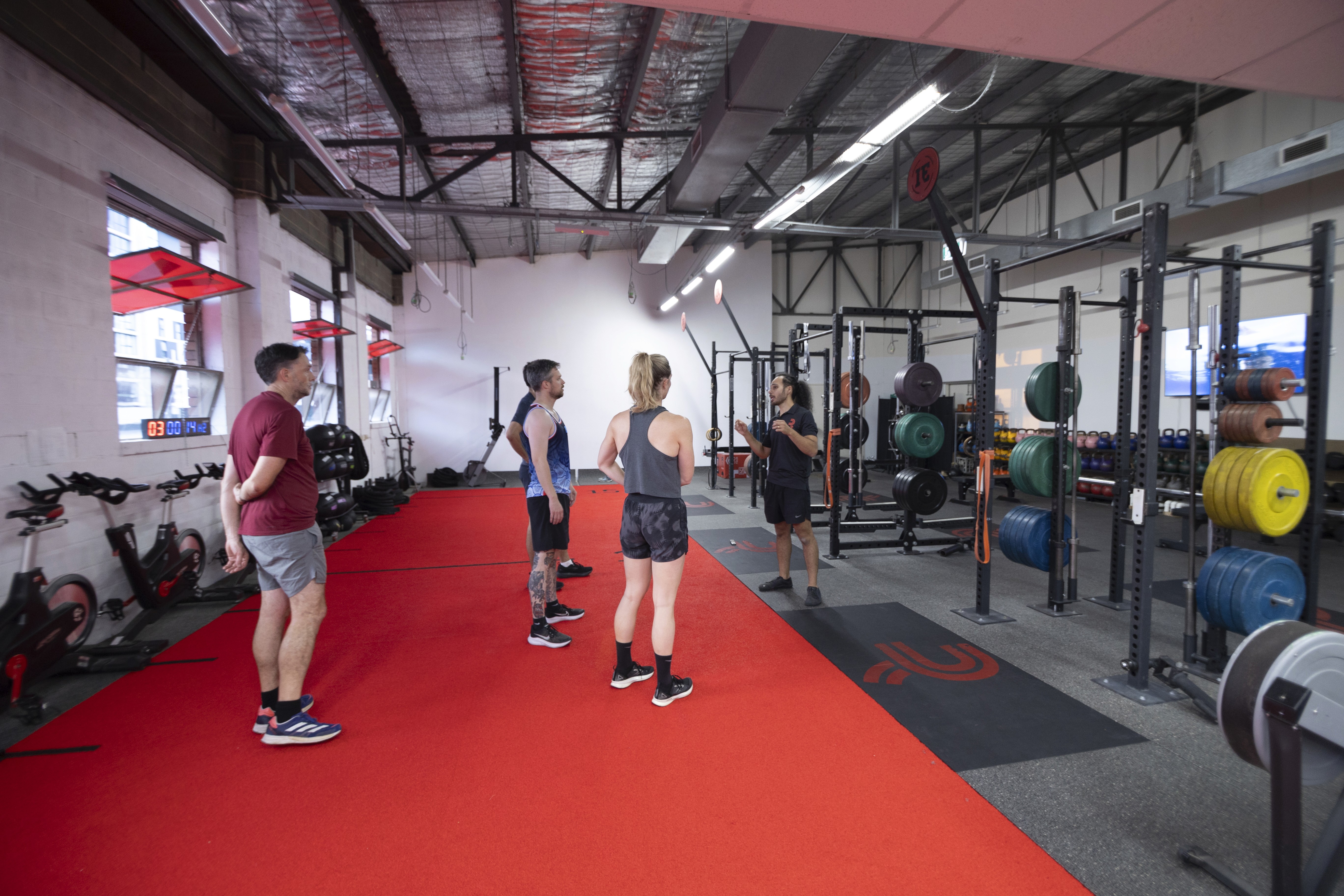
Walk into most gyms in Richmond and the "group class" experience is the same: twenty or thirty people crammed into a room, one coach shouting over the music, and almost no chance of anyone correcting your technique. It can be fun, but if your goal is real strength, better movement, and visible results, the size of your session matters far more than most people realise. This is exactly why The Richmond Gym caps every small group session at fewer than 8 members.
What the Research Actually Says About Smaller Sessions
This isn't just gym marketing. The link between how closely a coach can supervise you and how much progress you make has been tested directly in peer-reviewed research, and the findings are remarkably consistent.
Lower coaching ratios produce bigger strength gains
In a randomised controlled trial published in the Journal of Strength and Conditioning Research, Gentil and Bottaro (2010) split 124 untrained men into two groups running identical 11-week programs. The only difference was supervision: one group trained at a high coach-to-athlete ratio of roughly 1:5, the other at a low ratio of about 1:25. The closely supervised group made significantly greater gains in both upper- and lower-body strength, and far more of them trained at the intensity needed to actually drive results. The researchers concluded that direct supervision is a key factor in getting stronger — and a 1:5 ratio is exactly the territory a sub-8 small group falls into.
Supervised lifters push harder and gain more
An earlier study by Mazzetti and colleagues (2000) in Medicine & Science in Sports & Exercise compared 12 weeks of training that was either directly supervised by a personal trainer or done without supervision. The supervised lifters consistently chose heavier loads, increased their training weights faster, and finished with significantly greater maximal strength in the squat and bench press. When a coach is close enough to see your effort and nudge the weight up, you simply train harder — something that becomes impossible when one trainer is spread across a packed room.
In-person coaching also wins on consistency
More recent work confirms the pattern. Gavanda and colleagues (2025), also in the Journal of Strength and Conditioning Research, compared in-person supervised training with app-guided and self-guided approaches over 10 weeks. The supervised group showed the best results across strength, body composition and well-being, and crucially the highest adherence at over 88 percent, compared with just 52 percent for those left to train on their own. Results don't come from the perfect program on paper; they come from showing up and training hard, session after session, which is exactly what genuine coaching attention helps you do.
Why The Richmond Gym Keeps Classes Under 8 People
The research points to one clear principle: the more attention a coach can give each person, the better the outcome. That principle is built into how we run every small group session at The Richmond Gym, where classes are deliberately capped at fewer than 8 members. Here's what that smaller number actually buys you:
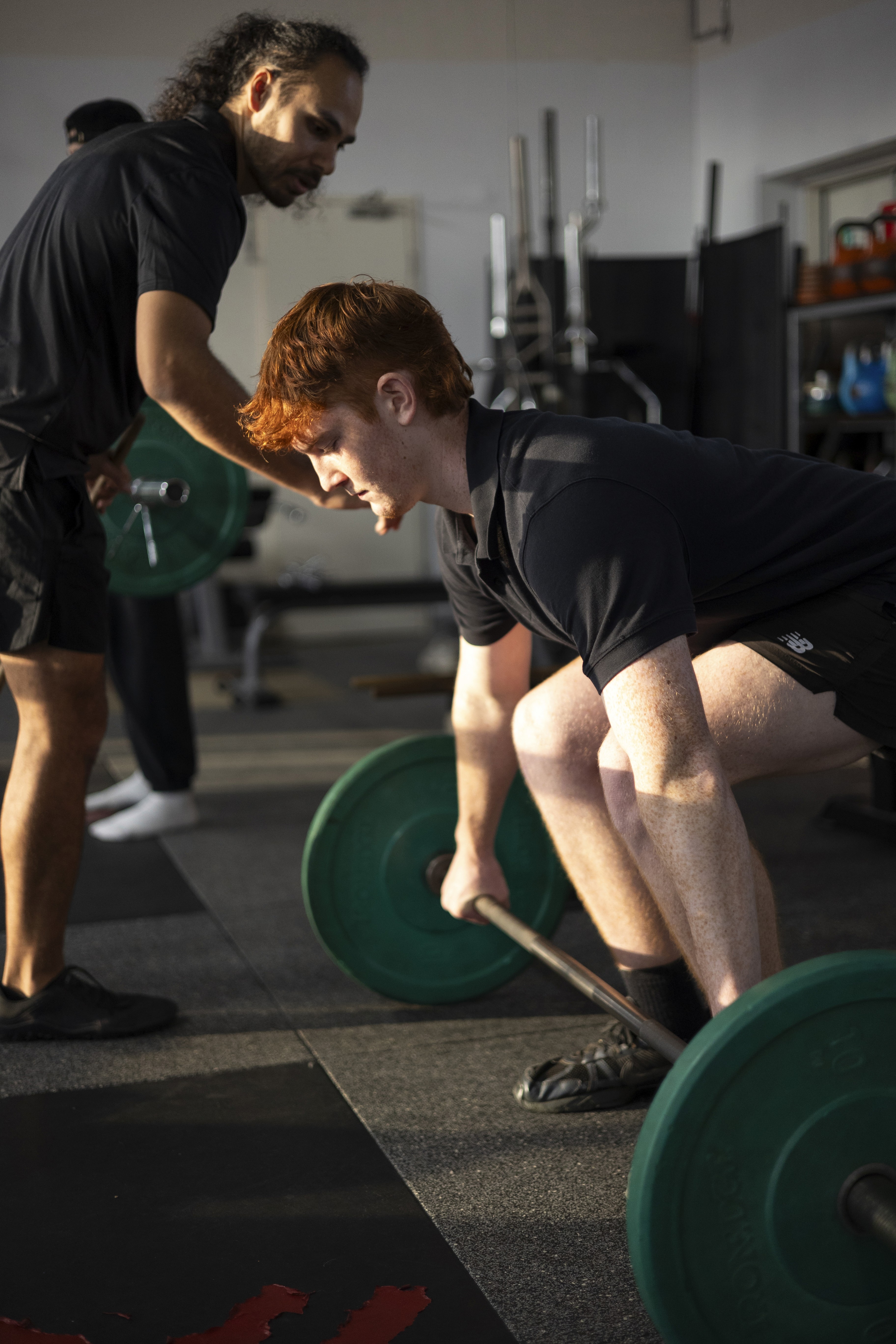
Real-time technique coaching, so you build strength safely instead of grinding bad habits into your body
Loads and progressions tailored to you, not a one-size-fits-all class average
More accountability, because in a group of fewer than 8 your coach notices when you're holding back — or when you don't show up
A genuine community feel, where you actually know the people training next to you
Try It For Yourself — Free
The best way to feel the difference a small group makes is to experience one. We're inviting you to come and train with us in a session of fewer than 8 people, get hands-on coaching, and see how much better training feels when someone is actually watching your every rep.
References
Gentil, P., & Bottaro, M. (2010). Influence of supervision ratio on muscle adaptations to resistance training in nontrained subjects. Journal of Strength and Conditioning Research, 24(3), 639–643.
Mazzetti, S. A., Kraemer, W. J., Volek, J. S., et al. (2000). The influence of direct supervision of resistance training on strength performance. Medicine & Science in Sports & Exercise, 32(6), 1175–1184.
Gavanda, S., Held, S., Schrey, S., et al. (2025). Optimizing resistance training outcomes: Comparing in-person supervision, online coaching, and self-guided approaches — A randomized controlled trial. Journal of Strength and Conditioning Research, 39(11), 1129–1137.