The Richmond Blog
Fitness Tips, Nutrition Advice & Member Stories
Stay inspired and informed with the latest articles from our fitness experts and community.

Apr 20, 2025
Fitness Tips
Is 40 Too Old to Start Strength Training?
If you’re over 40 and wondering whether you’ve missed your window to start lifting weights, here’s the short answer: you haven’t. The evidence is overwhelming that strength training is safe and highly effective well into later life. In fact, the older you are, the more you may have to gain, because resistance training directly counters two of the biggest threats to healthy ageing: muscle loss (sarcopenia) and declining bone density.
Bone follows a similar pattern. Bone mineral density typically peaks in your late 20s and gradually declines afterwards, with the drop often accelerating for women around menopause. Lower bone density means a higher risk of fractures later in life. The good news is that both muscle and bone are living tissues that respond to the right kind of loading, at almost any age.
It's Never Too Late to Build Muscle
A review of controlled trials, involving roughly 6,700 older adults, found that progressive resistance training produced a large and consistent improvement in muscle strength. It also delivered meaningful gains in everyday function, including faster walking speed and an easier time rising from a chair (Liu & Latham, 2009)
What About My Bones?
Lifting doesn't just protect muscle, it can actively strengthen bone. In the LIFTMOR randomised controlled trial, postmenopausal women with low bone mass completed eight months of supervised high-intensity resistance and impact training, including exercises like deadlifts and overhead presses, just twice a week. Compared with a control group, they saw significant improvements in bone mineral density at the spine and hip, along with better functional strength and balance (Watson et al., 2018).
Just as importantly, the trial reported that this heavier style of training was safe when properly supervised, challenging the old assumption that older adults with fragile bones should avoid lifting anything heavy. Done well, progressive loading is one of the few things shown to improve bone density rather than simply slow its decline.
How to Start Safely in Your 40s and Beyond
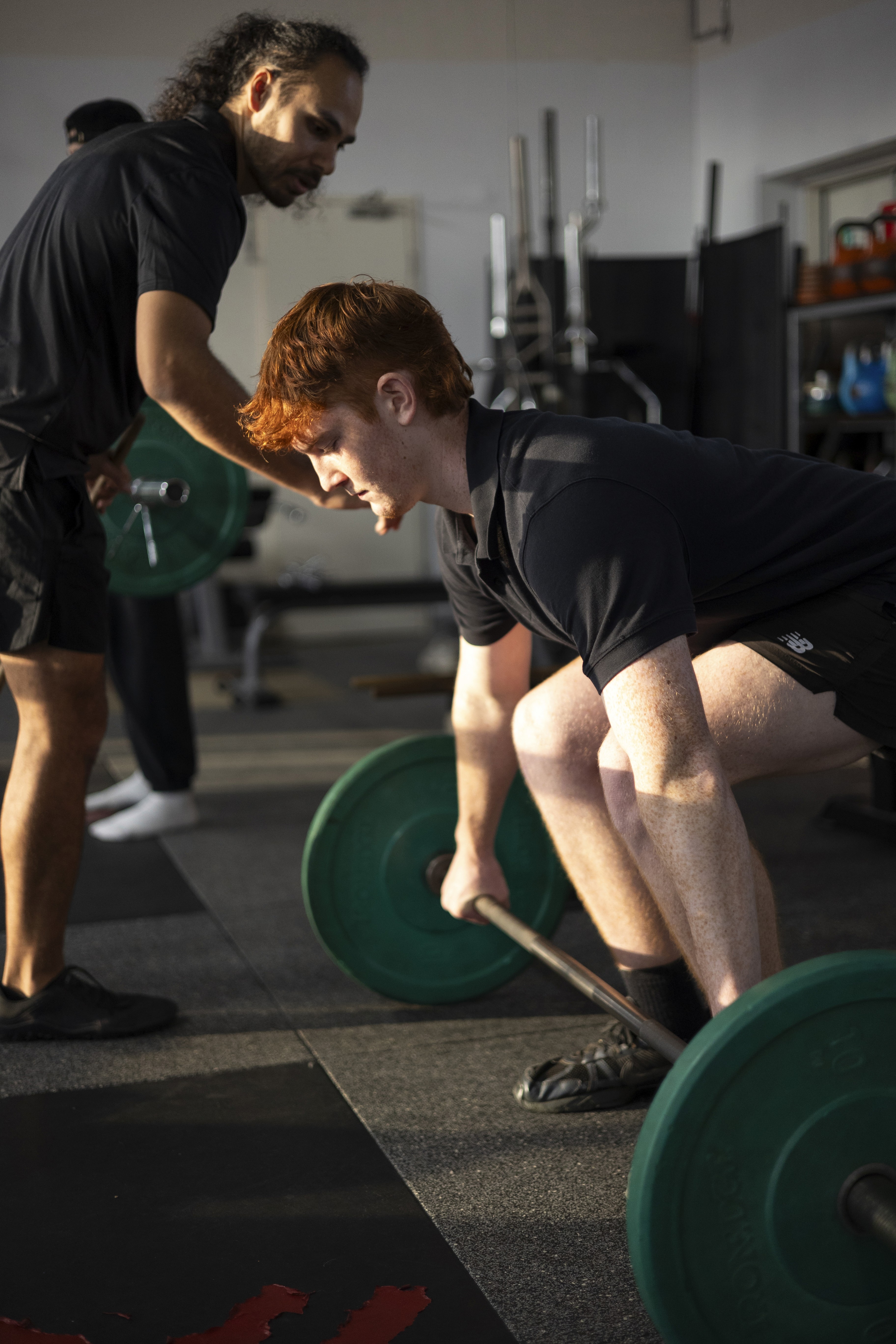
None of this means grabbing the heaviest barbell on day one. The benefits in the research come from progressive, well-coached training that meets you where you are and then gradually increases the challenge. That usually means learning solid technique on a handful of foundational movements, starting with manageable loads, and building up over weeks and months rather than days.
Good coaching matters most in the early stages, both to keep you safe and to make sure the loading is heavy enough to actually drive the muscle and bone adaptations you're after. If you have an existing health condition or you're new to lifting, it's worth training somewhere that can assess your movement and progress you sensibly.
Start Strong With Our 3-Week Strength for Life Program
If you're 40 or over and want the benefits of real strength training without the guesswork, our 3-Week Strength for Life intro offer is built for exactly that. You'll get coaching on the foundational lifts, sensible progression, and a plan designed around where your body is right now, so you can build strength that supports your muscles, bones and independence for years to come. Book your 3-Week Strength for Life intro at The Richmond Gym today and start building strength that lasts.
References
Cruz-Jentoft AJ, Bahat G, Bauer J, et al. Sarcopenia: revised European consensus on definition and diagnosis. Age and Ageing. 2019;48(1):16-31.
Liu CJ, Latham NK. Progressive resistance strength training for improving physical function in older adults. Cochrane Database of Systematic Reviews. 2009;(3):CD002759.
Watson SL, Weeks BK, Weis LJ, Harding AT, Horan SA, Beck BR. High-Intensity Resistance and Impact Training Improves Bone Mineral Density and Physical Function in Postmenopausal Women With Osteopenia and Osteoporosis: The LIFTMOR Randomized Controlled Trial. Journal of Bone and Mineral Research. 2018;33(2):211-220..