The Richmond Blog
Fitness Tips, Nutrition Advice & Member Stories
Stay inspired and informed with the latest articles from our fitness experts and community.

Apr 20, 2025
Fitness Tips
Move Better, Train Smarter: Why Movement Screening Matters
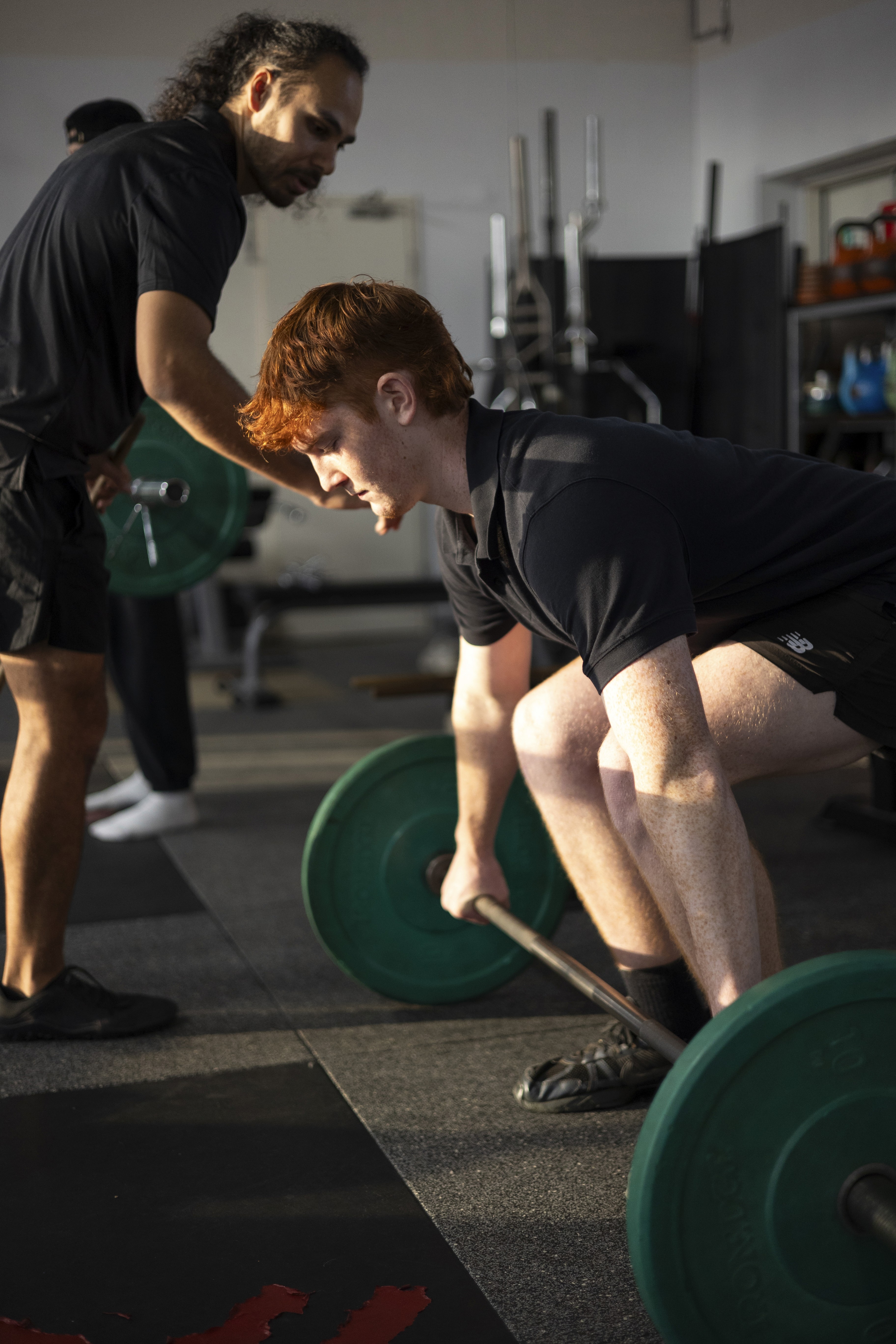
If you have ever started a new training program only to be sidelined by a nagging shoulder, tight hips, or lower back pain, you already understand the problem movement screening was designed to solve. Before we load a barbell or add intensity, we need to know how your body actually moves. At The Richmond Gym, that starts with an objective movement screen powered by Kinetisense.
Why movement screening matters
Movement screening is a systematic way of assessing how well you perform fundamental patterns such as squatting, reaching, lunging, and rotating. Rather than waiting for pain or injury to reveal a problem, screening identifies limitations, asymmetries, and compensations early, so we can address them before they become setbacks. The most widely studied tool in this space, the Functional Movement Screen (FMS), has been examined extensively in the research literature. A systematic review and meta-analysis by Dorrel and colleagues (Sports Health, 2015) found meaningful differences in screen scores between individuals who later sustained injuries and those who did not, supporting the idea that how you move carries useful information about your risk.
That said, the science is nuanced. A large systematic review and meta-analysis by Moran and colleagues (American Journal of Sports Medicine, 2017) concluded that movement screens should not be used as a standalone injury-prediction test in isolation, and reliability studies such as the meta-analysis by Cuchna and colleagues (Physical Therapy in Sport, 2016) highlight that consistency between assessors matters a great deal. The takeaway for us is not that screening lacks value, but that it is most powerful when the measurement is objective, repeatable, and combined with good coaching, which is exactly why we invested in technology-assisted screening.
How Kinetisense changes the game
Kinetisense is a markerless motion-capture and assessment platform that uses a camera to measure movement objectively, without the wands, sensors, or subjective eyeballing that traditional screens rely on. Instead of a coach guessing whether your right hip is more restricted than your left, Kinetisense captures measurable data on range of motion, posture, and functional movement patterns, then presents it in clear, repeatable numbers.
That objectivity solves the reliability problem the research warns about. Because the system measures the same way every time, we can track your progress week to week and be confident the change is real rather than a difference in who happened to assess you. It also makes the results easy to understand. You can see your own asymmetries and limitations on screen, which turns an abstract idea like left-to-right imbalance into something concrete and motivating.
From screen to solution: understanding corrective exercise
A screen is only useful if it changes what we do next. The purpose of screening is to guide targeted corrective exercise, which addresses the specific limitations we find rather than applying a generic warm-up to everyone. Frameworks such as Sahrmann’s movement system impairment approach (Brazil Journal of Physical Therapy, 2017) describe how repeated movement habits create predictable patterns of restriction and compensation, and how targeted correction can restore better mechanics. Research on focused interventions, for example studies on corrective programs for upper-crossed and forward-head posture, shows that specific, well-chosen exercises can improve alignment, muscle activation, and movement quality.
In practice, this means your screen results become a personalised roadmap. If Kinetisense shows a restriction in overhead reach or a hip asymmetry in your squat, your coach can prescribe mobility drills, activation work, and loading strategies aimed precisely at that finding, then re screen to confirm it is working. Screen, correct, reassess, and progress.
Ready to see how you move?
Our 3 Week Strength for Life program includes a full Kinetisense movement screen so you can start training with clarity rather than guesswork. You will get objective data on how your body moves, a corrective plan built around your results, and coaching to help you move better and build strength that lasts.
Start the 3 Week Strength for Life Program
References
Dorrel, B. S., Long, T., Shaffer, S., and Myer, G. D. (2015). Evaluation of the Functional Movement Screen as an Injury Prediction Tool Among Active Adult Populations: A Systematic Review and Meta-analysis. Sports Health, 7(6), 532-537.
Moran, R. W., et al. (2017). Do Functional Movement Screen (FMS) composite scores predict subsequent injury? A systematic review with meta-analysis. American Journal of Sports Medicine, 45(3), 725-732.
Cuchna, J. W., Hoch, M. C., and Hoch, J. M. (2016). The interrater and intrarater reliability of the Functional Movement Screen: A systematic review with meta-analysis. Physical Therapy in Sport, 19, 57-65.
Ludewig, P. M., and Braman, J. P. / Sahrmann, S., et al. (2017). Diagnosis and treatment of movement system impairment syndromes. Brazilian Journal of Physical Therapy, 21(6), 391-399.