The Richmond Blog
Fitness Tips, Nutrition Advice & Member Stories
Stay inspired and informed with the latest articles from our fitness experts and community.

Apr 20, 2025
Fitness Tips
Postpartum Strength Training: Rebuilding Your Body After Birth
Bringing a baby into the world is one of the most demanding things your body will ever do. Pregnancy and birth change your core, your pelvic floor, your hormones and your sleep, and returning to exercise afterwards can feel daunting. The good news is that strength training is one of the safest and most effective ways to rebuild after having a baby, provided you start sensibly and progress gradually.
When Can I Start Training Again?
There is no single date that applies to everyone. Recovery depends on the type of birth, whether there were complications, and how you feel day to day. Current guidance encourages a gradual return to activity once you feel ready, and your six-week check with your GP or obstetrician is a sensible point to discuss returning to structured exercise, especially after a caesarean. If you had a straightforward delivery, gentle walking, breathing and pelvic floor work can often begin in the early weeks, with loaded strength work layered in progressively from there. The key principle is to build back up rather than jumping straight to where you left off.
Rebuilding Your Pelvic Floor and Core
The pelvic floor and deep core take much of the load during pregnancy, and issues such as leaking when you cough or jump, and abdominal separation (diastasis recti), are extremely common afterwards. A 2025 systematic review in the British Journal of Sports Medicine found that pelvic floor muscle training in the first year postpartum reduced the odds of urinary incontinence by 37% and pelvic organ prolapse by 56% (Beamish et al., 2025). Training these muscles deliberately, then integrating them into full-body strength work, is one of the most evidence-backed things a new mother can do.
Strength, Body Composition and Confidence
Beyond the core, resistance training helps rebuild whole-body strength that everyday parenting demands, from lifting a car capsule to carrying a toddler on one hip. A randomised controlled trial of 60 postpartum women found that a structured resistance training program improved body composition and self-efficacy compared with a control group (LeCheminant et al., 2014). Regaining strength is not only about how you look; it is about feeling capable and resilient during a physically relentless stage of life.
The Mental Health Benefits
The early months with a newborn can take a real toll on mood. A systematic review of physical activity and postnatal depression concluded that regular activity is associated with a lower occurrence of depressive symptoms and can be a useful part of prevention and management (Kolomanska-Bogucka & Mazur-Bialy, 2019). Strength training in particular offers structure, achievable goals and a supportive environment, all of which matter enormously when you are adjusting to life as a new parent.
How to Start Safely
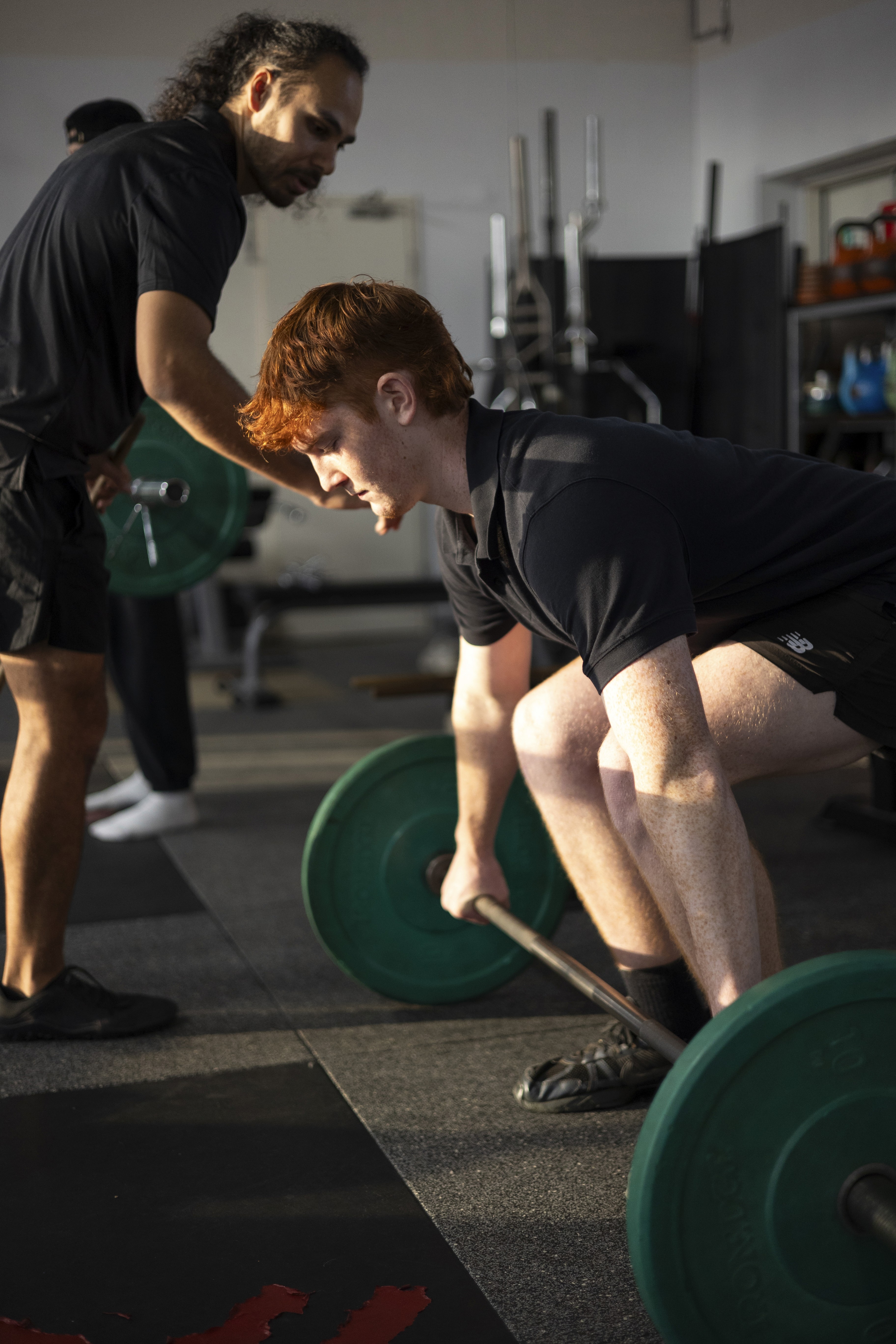
Start with breathing and pelvic floor activation, then reintroduce foundational movements such as squats, hinges, presses and rows using light loads and excellent technique. Progress the weight gradually as your strength and confidence return, and pay attention to signs that you may be doing too much too soon, such as leaking, heaviness or doming through the midline. Working with a coach who understands postpartum recovery means your program is scaled to where your body actually is, not where it was before pregnancy.
Rebuild Your Strength With Us
At The Richmond Gym, our small-group coaching (never more than eight people) means you get genuine, individual attention as you rebuild after birth. Our 3-Week Strength for Life intro offer is the perfect way to start: expert, science-backed coaching in a supportive environment, with every session scaled to your stage of recovery. Get in touch on 03 9939 6022 or drop into Unit 4/474 Victoria Street, Richmond to begin rebuilding your strength safely and confidently.
References
Beamish, N. F., Davenport, M. H., Ali, M. U., et al. (2025). Impact of postpartum exercise on pelvic floor disorders and diastasis recti abdominis: a systematic review and meta-analysis. British Journal of Sports Medicine, 59, 562-575.
LeCheminant, J. D., Hinman, T., Pratt, K. B., et al. (2014). Effect of resistance training on body composition, self-efficacy, depression, and activity in postpartum women. Women & Health, 54(1), 33-49.
Kolomanska-Bogucka, D., & Mazur-Bialy, A. I. (2019). Physical activity and the occurrence of postnatal depression - a systematic review. Medicina, 55(9), 560.