The Richmond Blog
Fitness Tips, Nutrition Advice & Member Stories
Stay inspired and informed with the latest articles from our fitness experts and community.

Apr 20, 2025
Fitness Tips
Phase Potentiation: How Smart Training Blocks Build Long-Term Progress
By James Ross, Head Coach at The Richmond Gym.
At The Richmond Gym, we place a strong emphasis on long-term development. Rather than chasing short-term results, we focus on building each physical quality in the right order so you get the greatest return from every phase of your training.
What is phase potentiation?
One of the key principles behind this approach is a concept from periodisation known as phase potentiation. In simple terms, it means that the adaptations you develop in one phase of training enhance your ability to benefit from the next. By sequencing training strategically, each phase sets you up for greater progress down the track.
In the research, phase potentiation is often discussed in the context of specific muscular adaptations. For example, spending time developing muscle size or connective tissue strength can create a better foundation for future strength or power gains.
Why the order of training matters
The same principle also applies at a systems level. Developing your aerobic fitness, for instance, doesn’t just improve endurance - it also enhances your ability to recover from high-intensity, anaerobic efforts. Better recovery between sets allows you to complete more quality work within a session, while improved recovery between sessions means you can train more consistently over time.
Movement quality creates better strength potential
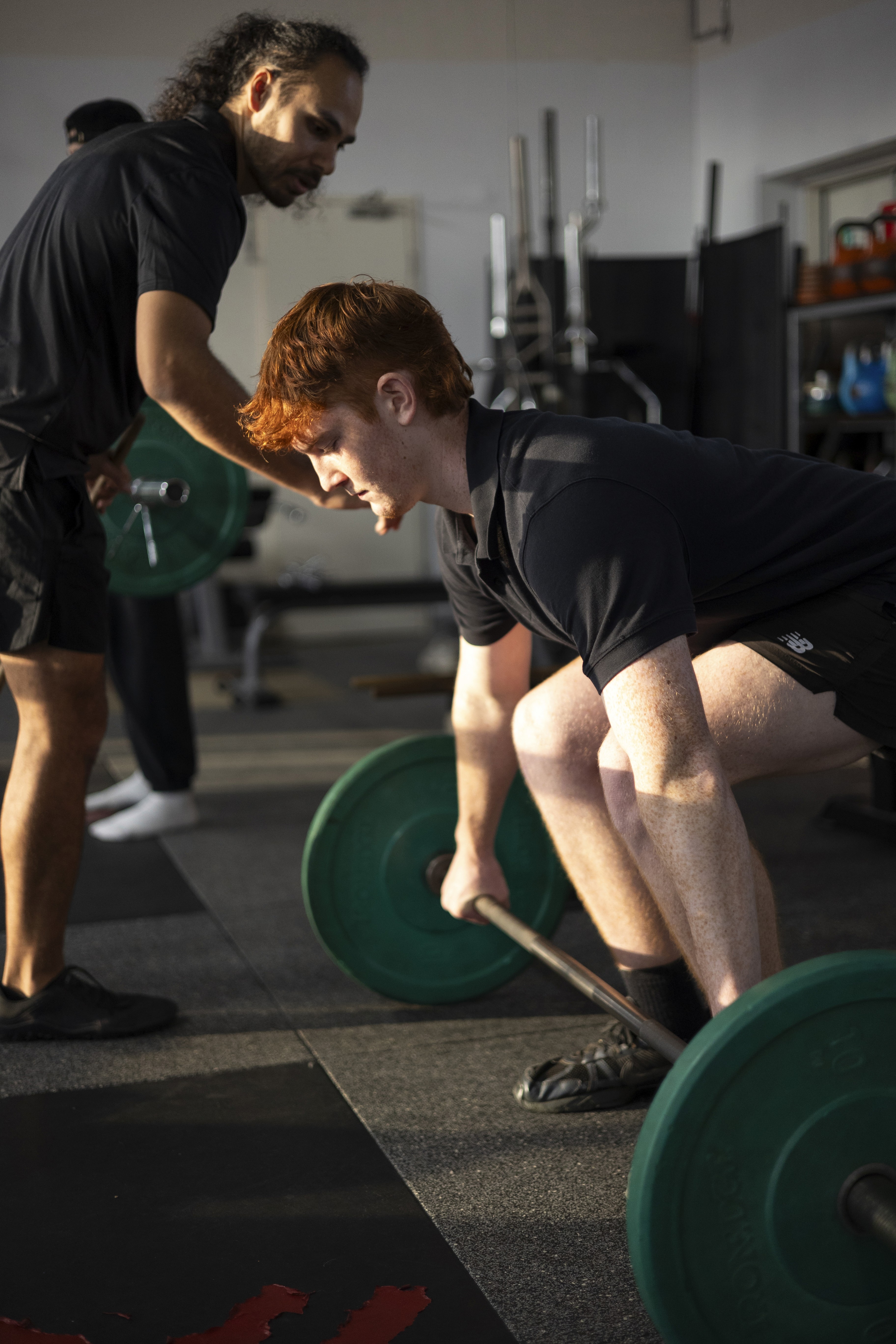
Phase potentiation can even extend to movement quality and technique. Improving flexibility or mobility can allow you to achieve stronger positions during key lifts, leading to better movement mechanics and greater force production. A Romanian deadlift, for example, can be used to improve hamstring flexibility while simultaneously strengthening the posterior chain, helping you achieve a more effective starting position for your conventional deadlift.
How we apply it at The Richmond Gym
At The Richmond Gym, our programming is built around six distinct training phases, each designed to prepare you for the next. Rather than viewing each block in isolation, we see every phase as an opportunity to build the foundation for future progress.
The result is a training system that prioritises sustainable development, consistent performance, and getting the most value from every session.
Train smarter, not just harder
If you’d like to experience this approach for yourself, come along to a free class and see how our programming can help you train smarter, not just harder.
What this means for your weekly training
For most members, phase potentiation means your training should not feel random. A block focused on building work capacity, improving positions, or developing muscle is not a detour from strength—it is part of the pathway toward it. Each phase has a job to do, and the value of that phase is often seen most clearly in the training that follows.
This is why we do not try to chase every physical quality at maximum intensity all year round. If every session is treated like a test, the body never gets the opportunity to build the qualities that make future performance possible. Strategic variation gives you the right stimulus at the right time.
The coach’s job is to connect the phases
As coaches, our role is to help you understand why a phase matters, how it connects to your broader goals, and how to execute it properly. Some phases may feel less exciting than others, especially when the focus is on control, capacity, mobility, or technical refinement. But those phases often create the conditions that allow heavier, faster, or more intense training to be productive later on.
Good programming is not just about what exercise appears on the board today. It is about understanding what today’s work is preparing you for next month, next block, and next year.
The long game wins
Phase potentiation is one of the reasons long-term, structured training outperforms program hopping. When each phase is designed to build on the last, your progress becomes more sustainable, your training has clearer purpose, and your body is better prepared for the demands ahead.
The goal is not to do everything at once. The goal is to build the right qualities in the right order, so every block of training makes the next one more effective.